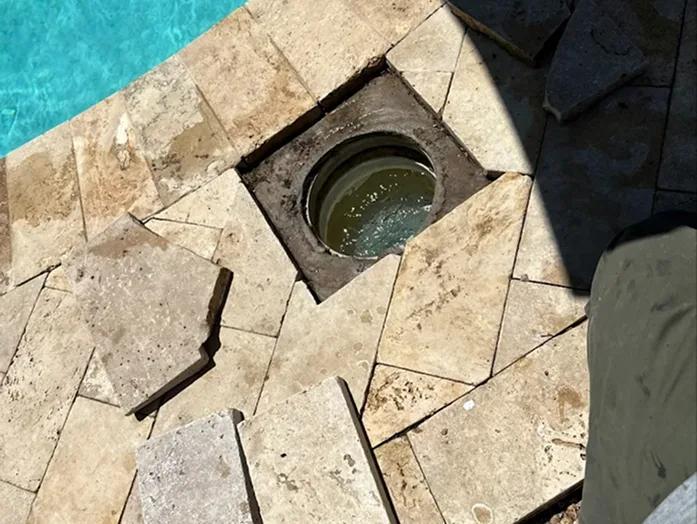
Cold plunging has moved from a niche athletic recovery practice to something a lot of serious homeowners around the Phoenix North Valley are building into their backyards. Here in North Phoenix, Glendale, and Peoria, that interest has translated into a growing number of custom and in-ground cold plunge installations, and with them comes a set of maintenance needs that are genuinely different from a standard pool or spa.
If you have an in-ground or custom-built cold plunge system at your North Phoenix, Glendale, or Peoria home, here is what you need to know about keeping it running the way it should in our climate.
What We Are Talking About: In-Ground and Custom Cold Plunge Systems
A lot of products on the market use the words "cold plunge." Consumer-grade portable units with a plug-in chiller, soft-sided tubs with basic filtration, and prefab inserts all fall under that umbrella. This post is not about those.
The focus here is on custom and in-ground cold plunge systems: units built into a concrete or gunite shell, often alongside a pool or spa, with dedicated filtration, a circulation pump, and a commercial-grade chiller or heat and cool unit. These systems are more capable and more complex to maintain properly.
In Phoenix, where summer afternoons routinely push past 110 degrees, holding cold plunge temperatures in the 50s or low 60s Fahrenheit asks a lot of a chiller. The maintenance demands on that equipment in the Arizona climate are real and ongoing.
How a Custom Cold Plunge System Is Different From a Pool
Understanding why cold plunge maintenance is its own category starts with what makes these systems unique.
Small water volume, high load. A cold plunge holds a fraction of the water a pool does, often 100 to 300 gallons for an in-ground residential unit. When one or two people use it, the impact on water chemistry per session is proportionally much larger than the same use in a several-thousand-gallon pool. Body oils, sweat, and organic load hit a small water volume hard, so chemistry needs closer attention.
Low temperature creates a different chemistry environment. Cold water behaves differently than warm pool water when it comes to sanitizer activity and overall balance, and circulation patterns shift at low temperatures too. Getting the chemistry right in a cold plunge takes an understanding of how temperature affects sanitizer behavior in ways that standard pool guidance does not fully cover. This is one area where professional testing pays off.
The chiller is the central piece of equipment. A well-functioning custom cold plunge depends on a chiller that is sized correctly and maintained regularly. In a Phoenix summer, a chiller holding 55 degrees is fighting ambient air that can be 50 to 60 degrees hotter than its target. That is a heavy mechanical load. Coil condition, condenser cleaning, and overall unit health all belong in a serious maintenance routine.
The filter is dedicated and often different. Many in-ground cold plunge systems use a cartridge filter rather than a full sand or DE setup, given the smaller water volume. Those cartridges usually need cleaning more often than pool owners expect, because the ratio of bather load to water volume is high.
Water Chemistry for Cold Plunges in Arizona
Arizona's hard water creates the same calcium and mineral challenges in a cold plunge that it does in a pool, just concentrated into a much smaller volume. Left unmanaged, calcium scale can build up quickly in the plumbing, on the filter, and on the internal surfaces of the plunge.
Key parameters worth watching include:
Sanitizer levels. Chlorine or bromine, depending on what your system uses, needs to stay in a safe and effective range. In a small volume with high bather load, sanitizer can drop fast after use. Regular testing is not overkill here.
pH. pH that drifts high speeds up calcium scale and reduces sanitizer effectiveness. With the chiller and plumbing in close contact with the water, scale is something to stay ahead of rather than chase.
Calcium hardness and total dissolved solids. Because volumes are small and some evaporation still happens, TDS and calcium hardness can climb relatively quickly. Whether a partial drain and refill helps depends on your specific water and use pattern, which is where periodic professional testing comes in.
Oxidation. Shocking a cold plunge periodically helps clear organic buildup from body oils and compounds that routine sanitizer does not fully address. How often that is needed depends on use frequency.
A quick note on safety: cold plunge chemicals are concentrated and the water volume is small, so dosing mistakes show up fast. If you are not sure what your readings mean, have the water tested professionally before adjusting rather than guessing.
The Filter and Circulation
In North Phoenix, Glendale, and Peoria, cold plunge equipment sits in the same brutal environment as pool equipment: extreme heat, dust storms, insects, and constant UV. For the maintenance Desert Rose handles on cold plunges, the focus is the filter.
Many in-ground cold plunge systems use a cartridge filter. With the small water volume and relatively high bather load, that cartridge typically needs cleaning more often than owners expect. Monthly filter cleans keep the system running well and catch any early signs of fouling before they affect water quality.
For chiller or refrigeration issues, those are separate from what we service. A refrigeration or HVAC technician is the right call for anything on the chiller side.
Drain and Refill Frequency
The small water volume of an in-ground cold plunge means full drains and fresh refills may be needed more often than for a swimming pool. How often depends on use frequency, how well ongoing chemistry is managed, and how quickly TDS and calcium accumulate.
Some owners with heavy daily use find a drain and refill every few months keeps water quality where it should be. Others with lighter use and attentive chemistry can go longer. There is no single right answer. TDS, calcium hardness, surface condition, and professional testing all factor in, so we avoid hard guarantees on intervals. Having someone assess the water periodically gives you a far more accurate read on when a drain actually makes sense.
What Desert Rose Pool Care Can Help With
Desert Rose Pool Care is a CPO-certified team serving North Phoenix, North Glendale, Peoria, Deer Valley, Norterra, Desert Ridge, Arrowhead Ranch, Moon Valley, and nearby Phoenix North Valley communities. For cold plunges, our service is focused: we handle monthly filter cleans for in-ground and custom cold plunge systems. That is the ongoing maintenance we offer for these units.
For chiller repairs, refrigeration issues, or mechanical problems with your cold plunge equipment, you will want to work with a refrigeration or HVAC technician who handles that type of equipment. Our lane is the filter side.
If you have a portable plug-in tub, our focus is on in-ground and custom systems, so those are reviewed case by case.
If you have a custom cold plunge and want to talk through monthly filter service, reach out and we will walk through what your setup needs.