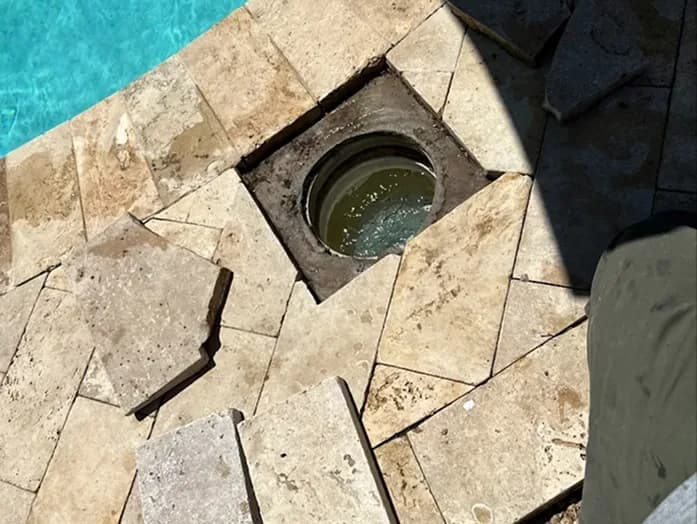
A pool closure at your own home is inconvenient. At a short-term rental, it can also mean a disappointed guest, a refund request, and a problem you have to solve from miles away.
If your Phoenix-area rental’s water needs replacing, a planned maintenance window gives you more control than waiting for a problem during an occupied stay. The point isn’t to drain every rental pool every year. It’s to test the water, identify what needs attention, and schedule necessary work before guests are depending on the pool.
For owners in North Phoenix, Peoria, and Glendale, a post-summer assessment is a useful place to start.
What summer can leave behind
This year’s heat and dust provide a timely reason to check the water. The National Weather Service ranked August 2026 as Phoenix’s fourth-warmest August by average temperature and documented a significant dust storm on August 19.
Add frequent swimming to those conditions and the pool’s treatment needs deserve close attention. The CDC’s pool-water guidance explains that sunlight and contaminants from swimmers reduce chlorine levels and recommends more frequent testing when many people are using the water.
Keeping the pool clear today is only part of the job. A seasonal review should also check what has accumulated during months of treatment and refilling.
Two readings that matter before your next busy stretch
Cyanuric acid, or CYA, is the chlorine stabilizer. It protects chlorine from sunlight, but repeated use of stabilized tablets or granules adds more of it. As Orenda’s chemistry guide explains, dilution with lower-CYA water is one practical way to reduce an excessive level.
The CDC notes that CYA lengthens chlorine’s disinfection time. If stabilizer is excessive, continuing to add the same tablets can add to the underlying problem instead of resolving it.
Calcium hardness is the mineral side of the equation. Evaporation leaves minerals behind, and hard-water top-offs add more. Orenda’s calcium guidance explains why calcium must be balanced with pH, alkalinity, and temperature to manage scaling risk.
For a rental owner, the takeaway is straightforward: a pool that looks clear still needs chemistry testing. Have the pool water and fill water evaluated before choosing a partial replacement or a full drain and refill.
What rental owners can learn from hotel pool requirements
Hotel pools are a useful reference for the importance of consistent water management, but their rules shouldn’t be assumed to apply identically to every rental home.
Maricopa County’s pool code includes hotel and resort pools in its definition of semipublic swimming pools. Its water-quality standards require regulated pools to maintain disinfectant and water clarity, keep surfaces free of algae, and perform and log regular testing. The operating rules require closure when specified unsafe conditions exist, including violations of those physical water-quality standards.
The practical lesson for a host is to manage water quality before a closure becomes necessary. Confirm your property’s classification and applicable requirements with the authority responsible for it rather than assuming a hotel’s rules automatically apply to your listing.
Can replacing the water help prevent an algae-related shutdown?
When excessive CYA is making sanitizer management difficult, appropriate water replacement addresses that contributing condition. Combined with proper chlorine levels, brushing, filtration, and circulation, it can help reduce the conditions that allow algae to take hold.
That isn’t a guarantee against algae or closures. A fresh fill won’t fix a failed pump, inadequate circulation, or missed sanitizer checks. Existing algae also needs proper treatment and cleaning; replacing water alone isn’t a complete recovery plan.
The aim is to reduce avoidable trouble, not promise that one service visit will make the pool maintenance-free.
Pick your property’s maintenance window
For a rental, “off-season” should mean a suitable weather window and an intentional gap in bookings. Don’t assume cooler weather means the property will be empty, especially if guests use a heated pool.
A practical plan includes:
- Test before blocking dates. Confirm whether water replacement is needed and how much.
- Agree on the scope and price. Include draining, refilling, water balancing, and any separate cleaning or equipment work that’s needed.
- Allow time beyond the drain itself. Filling, balancing, verification, and reheating, if applicable, all need to fit before the next promised pool use.
- Coordinate guest communication. Don’t advertise the pool as available during the work or promise a reopening time before it’s confirmed.
- Keep a testing plan between service visits. Decide who checks the water and who responds when a reading or equipment problem needs attention.
At Desert Rose Pool Care, visits outside your regular service day are available for an additional charge. They aren’t automatically included in a standard weekly plan, so discuss extra coverage in advance.
Make pool availability part of your property plan
A seasonal water assessment gives you a chance to address excessive stabilizer, mineral buildup, and maintenance concerns on a schedule you can plan around.
Desert Rose Pool Care works with short-term rental owners in North Phoenix, Peoria, and Glendale. Contact us to review your pool’s condition and plan any needed drain and refill around suitable weather and your booking calendar.